

Go Piss
Performance installation by Mossy Jade, commissioned by Fremantle Biennale for ‘Room Service’ 2025, Perth, WA.
Go Piss is a performance installation that confronts the policing of gendered space and the social surveillance placed upon bodies that do not conform to normative expectations of femininity.
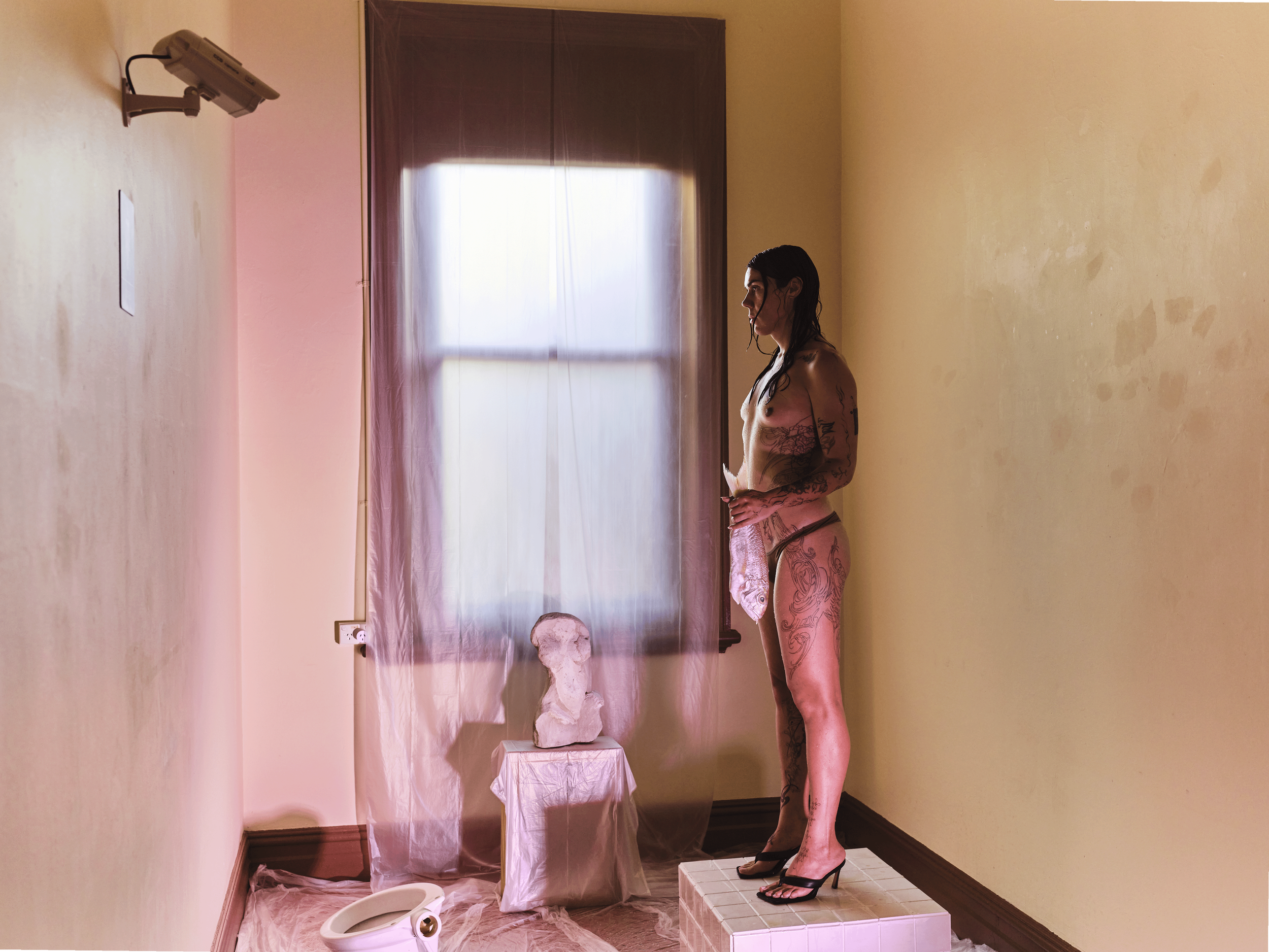
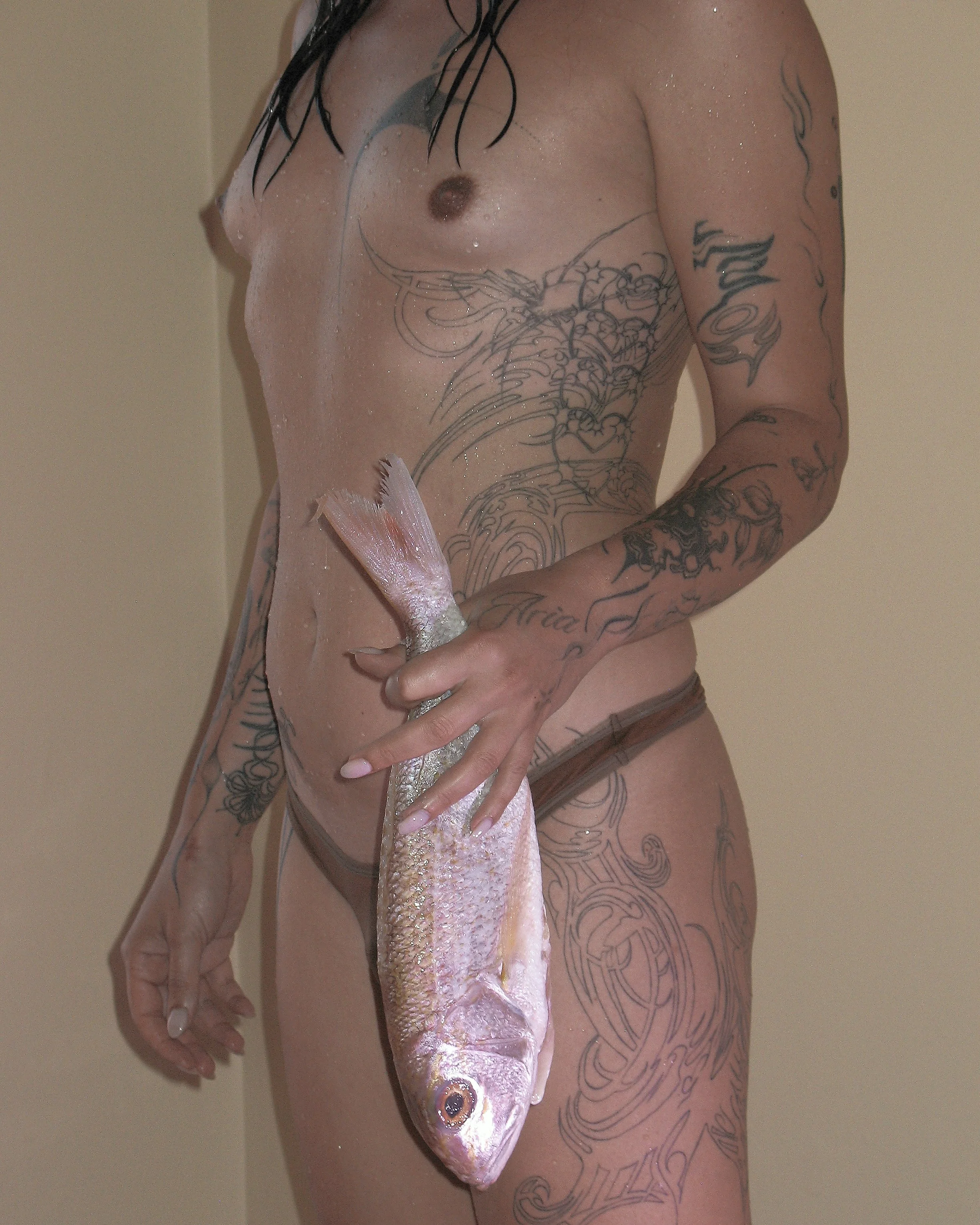
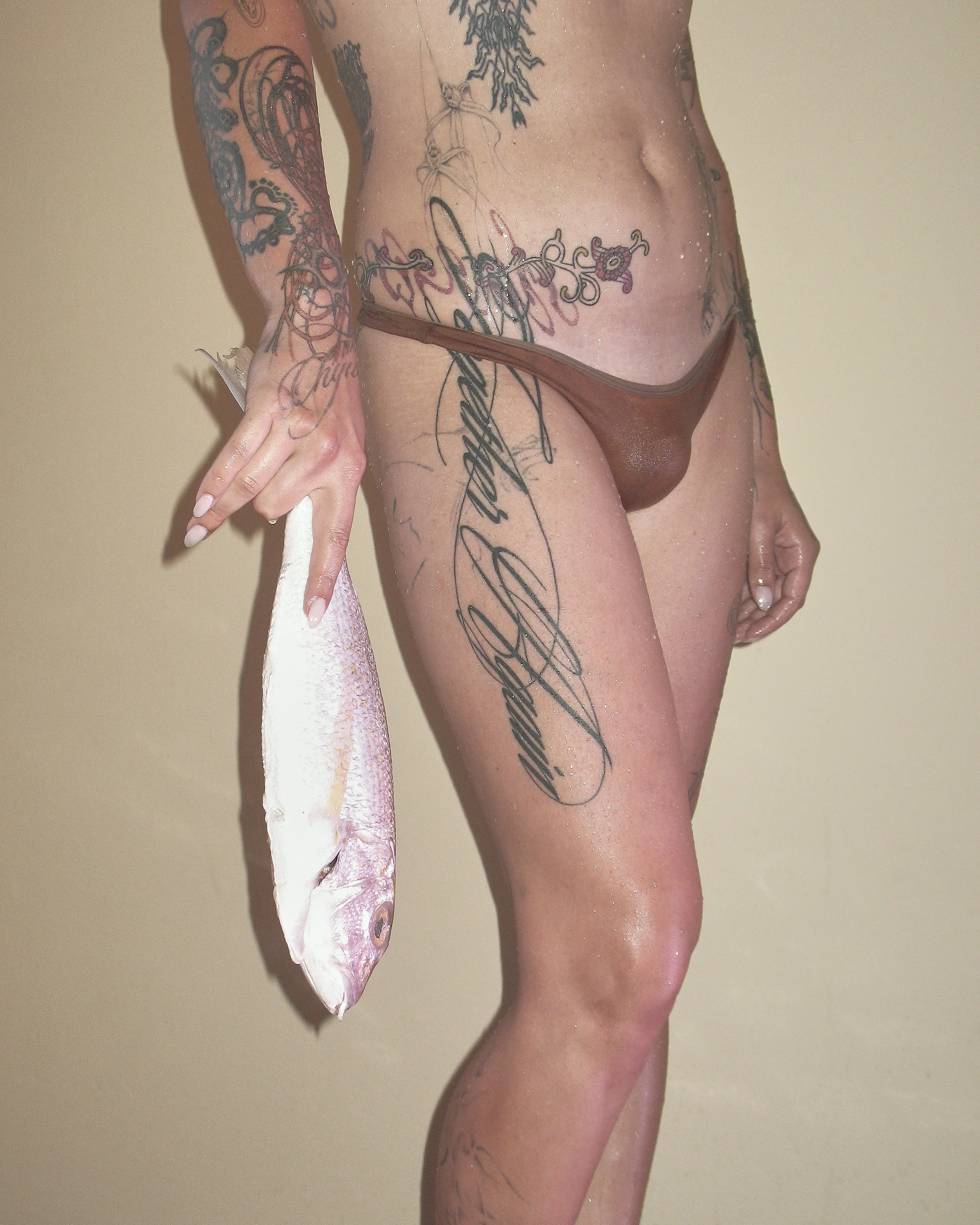
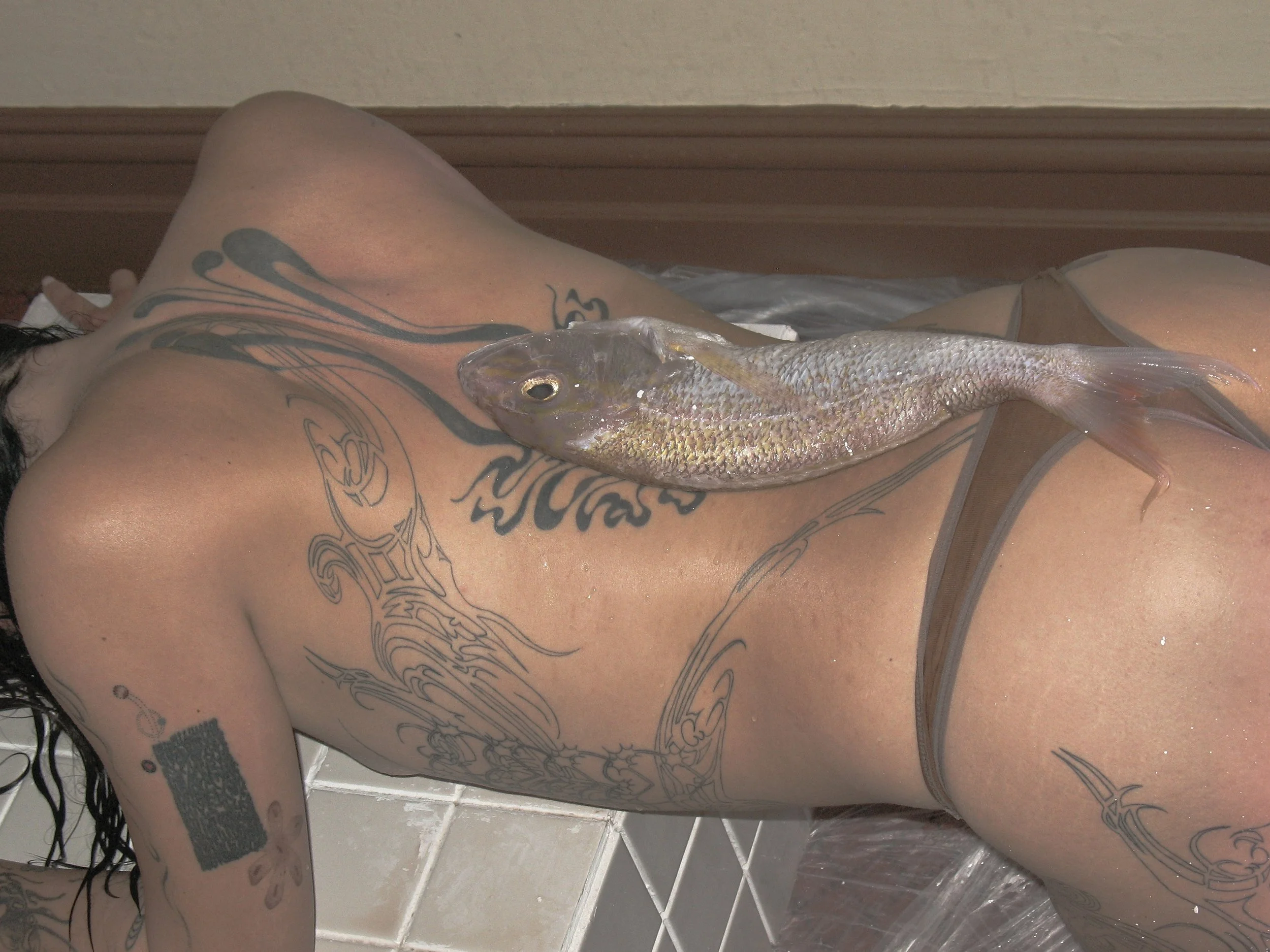
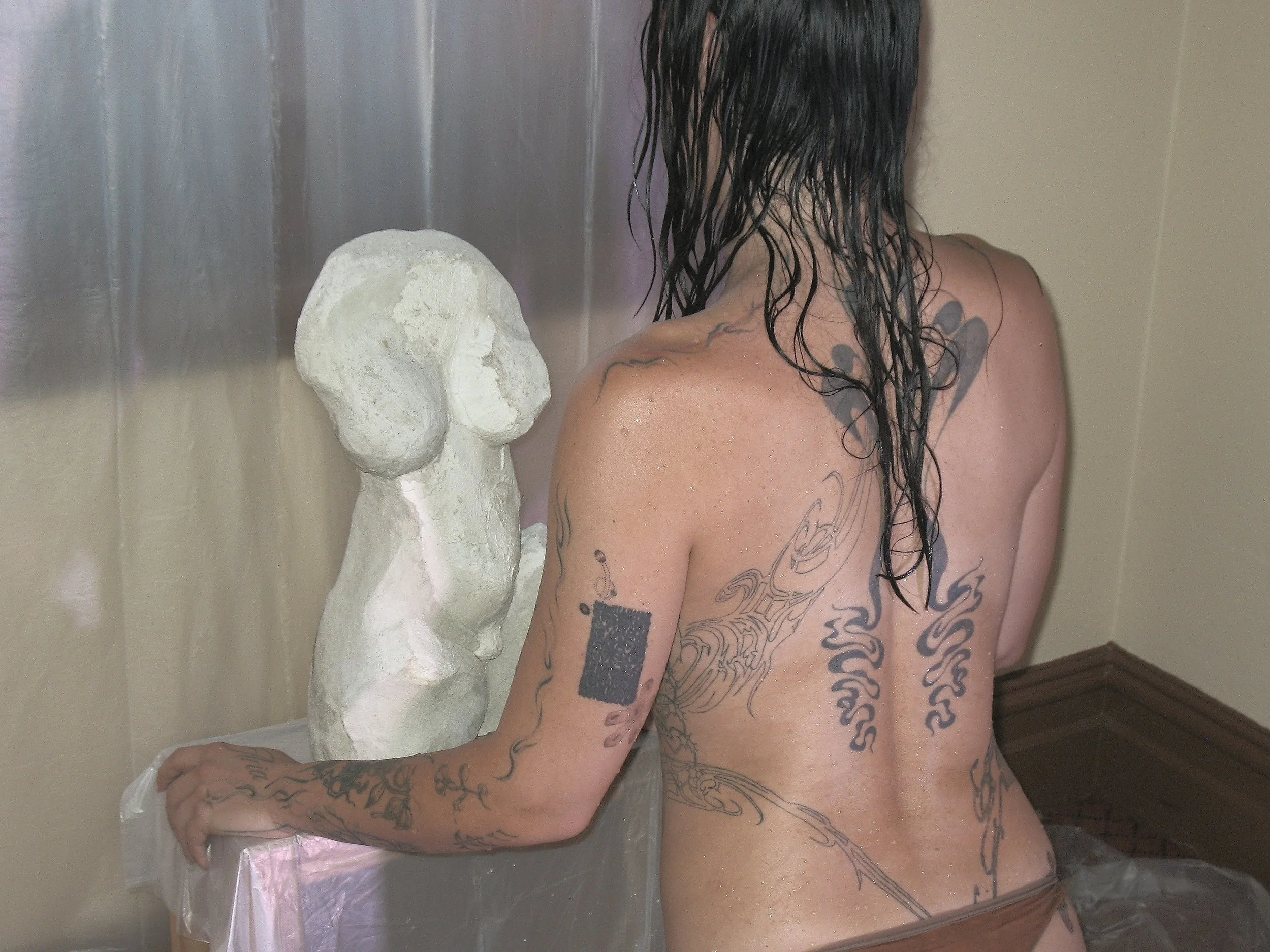
At the centre of the work, a naked trans woman stands atop a white tiled plinth resembling a bathroom structure. The tiles evoke the clinical familiarity of public bathrooms and medical spaces, environments where the body becomes subject to regulation and scrutiny. The performer holds a fish, moving slowly between sculptural, statue-like poses—moments of stillness interrupted by subtle gestures of care and tension. Her gaze occasionally meets a CCTV camera mounted on the wall above a women’s bathroom sign, reinforcing the sense of constant observation.
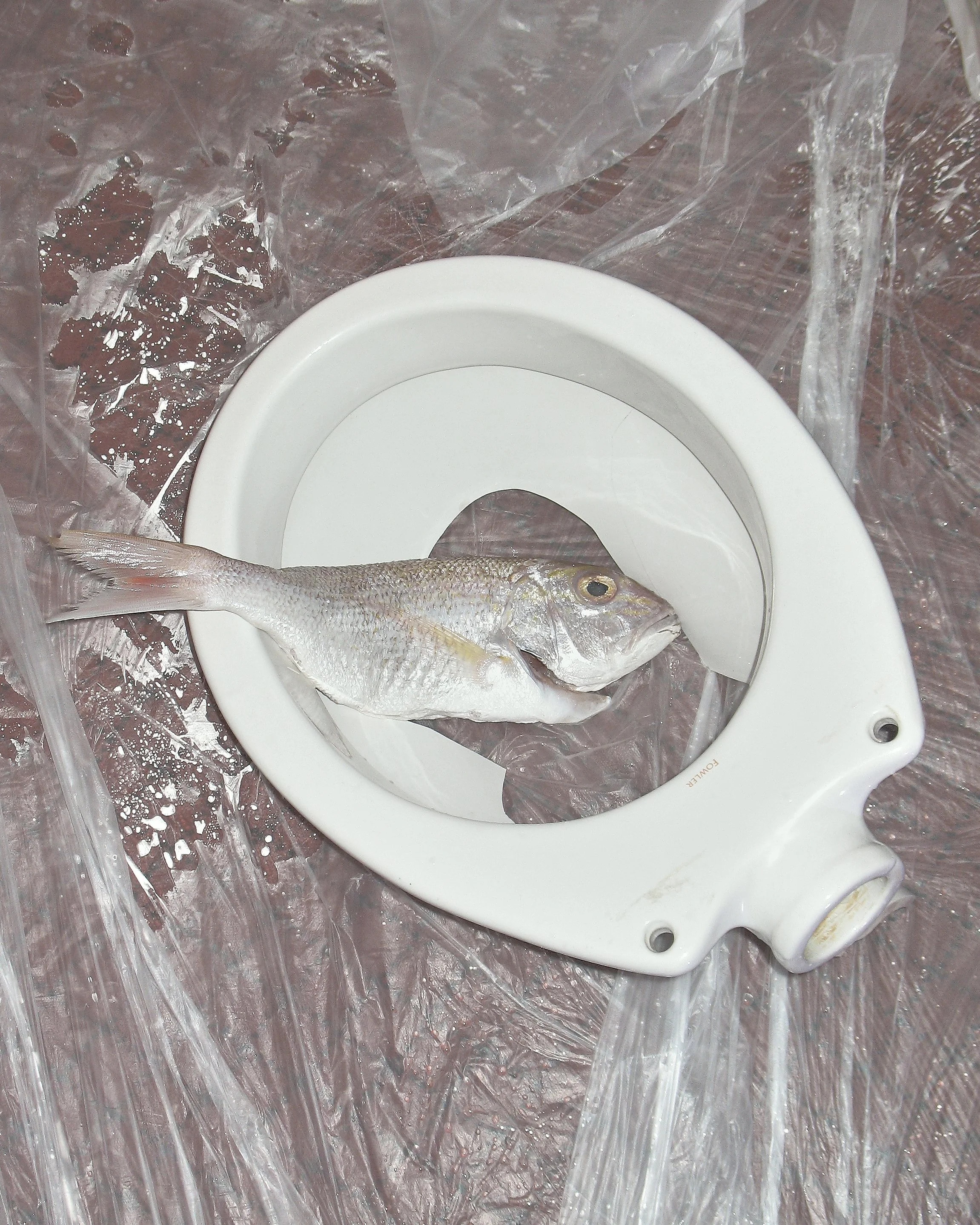
The room itself is staged as a fragile and uneasy environment. Sheer plastic drop sheets line the walls and floor, creating a sterile atmosphere reminiscent of temporary containment or forensic spaces. In one corner, a broken toilet sits partially collapsed, its bowl fractured open and revealing its exposed plumbing and industrial markings. Nearby rests a concrete bust of a trans woman’s torso, solid and immobile in contrast to the living body occupying the plinth. Bright, clinical lighting heightens the starkness of the space.
The work emerged in response to a transphobic incident Mossy experienced after being chased out of a women’s bathroom in a public gym. The confrontation unfolded publicly, with an individual shouting accusations and drawing the attention of others present. Despite witnessing the event, the gym’s management later dismissed the incident and failed to provide meaningful support.
Go Piss reflects on how spaces as ordinary as bathrooms become contested territories where bodies are categorised, monitored, and policed. While the work addresses the specific vulnerability of trans women, it also gestures toward the broader implications of gender surveillance. When access to space becomes conditional upon how femininity is perceived or validated, all women become subject to scrutiny.
The fish held by the performer carries layered symbolism. It references religious imagery of prophecy and transformation, while also drawing from ballroom culture, where the term “fish” or “fishy” historically describes a trans woman, femme queen, or drag performer who embodies a convincing or “passing” femininity. Within the work, the fish becomes an object of both reverence and suspicion, reflecting the paradox faced by many trans women: visibility can invite admiration, yet difference is often framed as deception.
Through stillness, exposure, and confrontation with the viewer’s gaze, Go Piss asks audiences to consider who is allowed safety, privacy, and dignity within the most basic acts of everyday life.